Video Case
RGB LED Bollard Light for Park Walkways & Paths
A flush line of colour-changing light along the path — no visible hardware, no glare at eye level.
A flush line of colour-changing light along the path — no visible hardware, no glare at eye level.
Park paths are the hardest lighting brief on a landscape project. The path has to be safe to walk, the light source has to stay out of a pedestrian's eye line, and the planting next to it has to be revealed rather than flattened. A bollard light solves all three by disappearing into the ground: the fixture is set flush with the paving, the light leaves the lens at a controlled angle, and only the effect is visible.
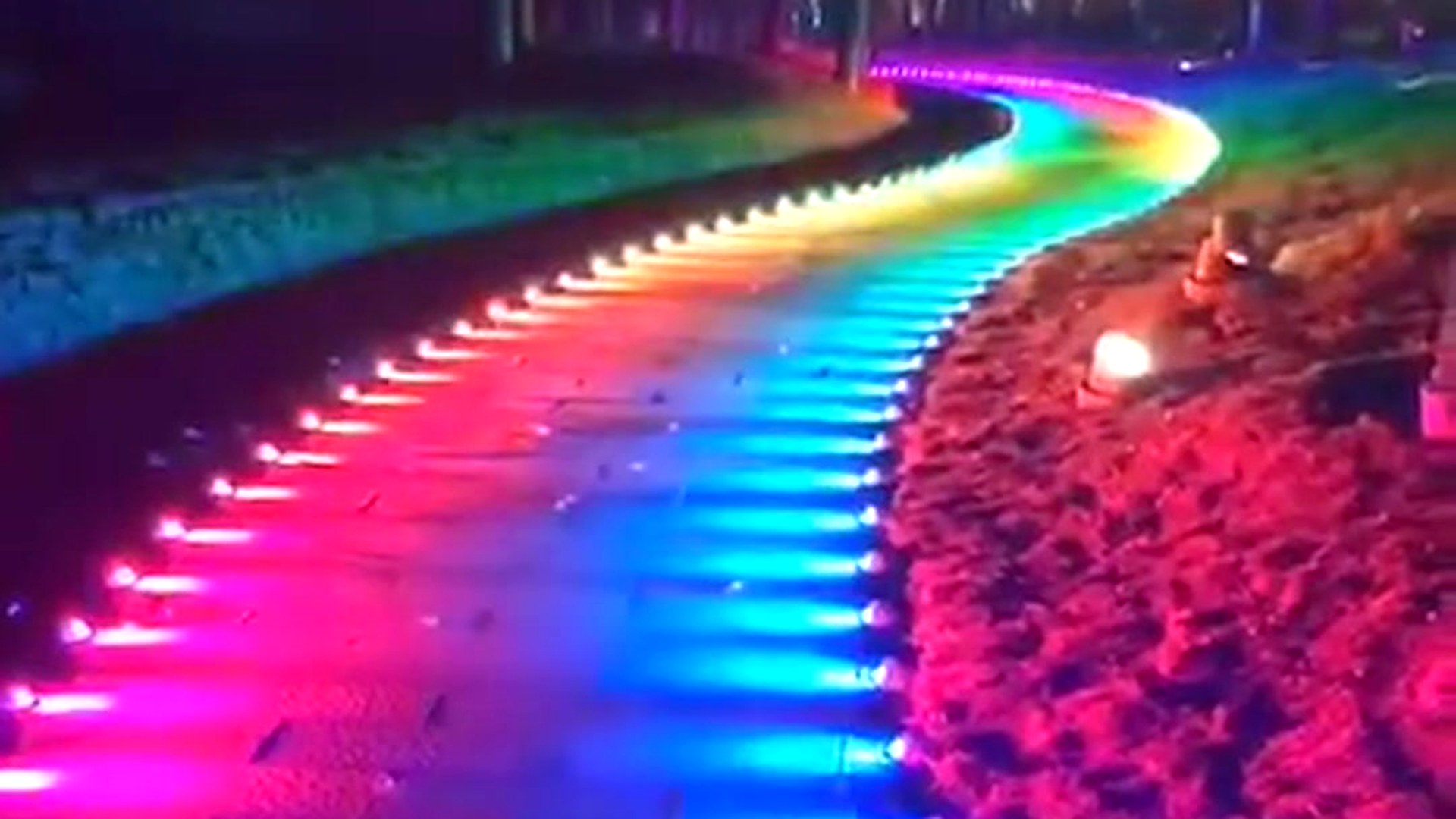
A continuous run of bollard lights set into a park walkway, cycling through RGB programmes. Because every fixture is identical and driven from one DMX line, the whole path reads as a single ribbon of colour rather than a row of individual points. The same installation is used for a daytime event palette, an evening ambience setting and a festival scene — a change of programme, not a change of hardware.
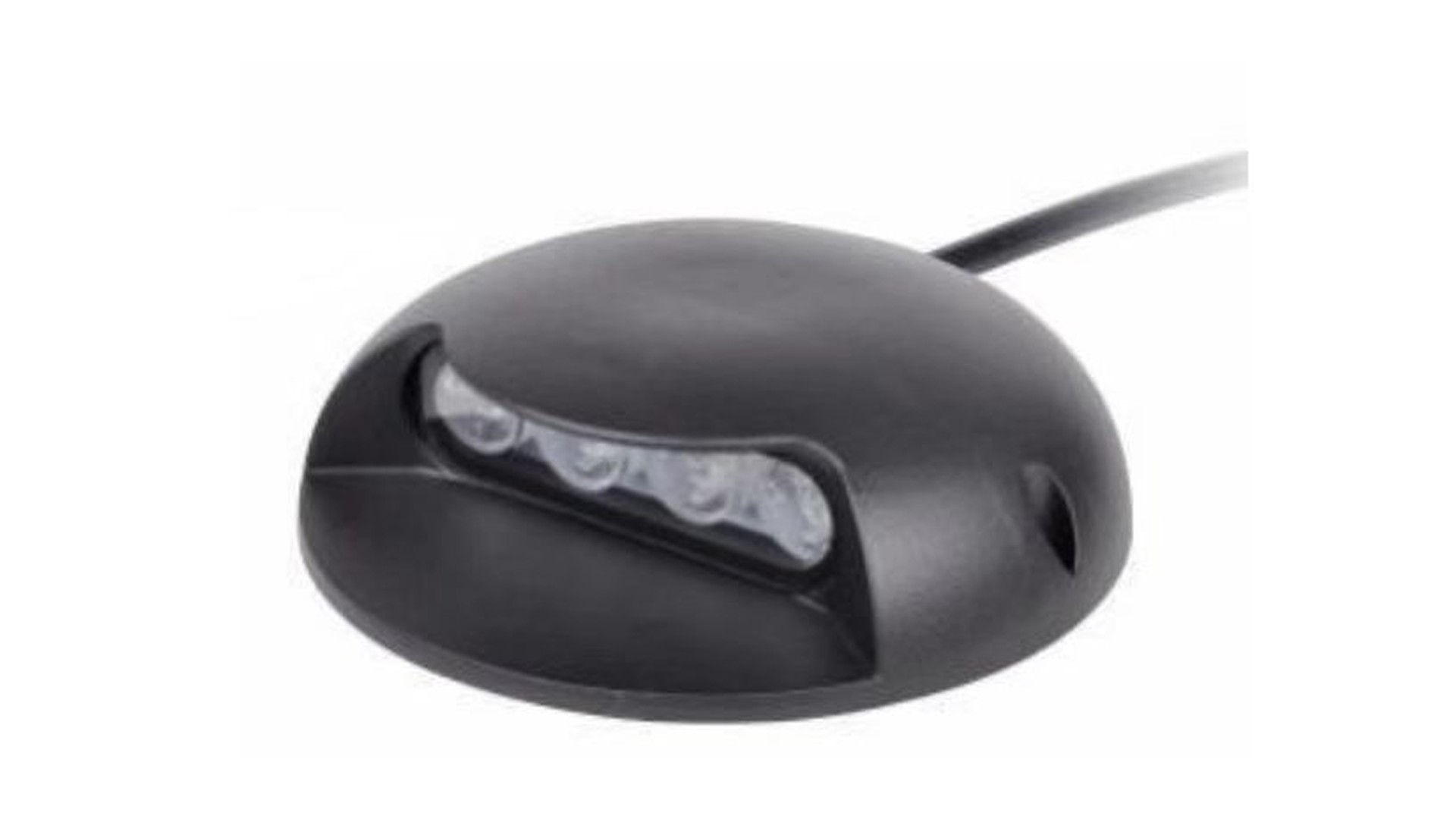
The lens is set deep inside the housing and the aperture is asymmetric, so the beam leaves the fixture at a shallow downward angle and washes the paving rather than pointing at the walkway. A pedestrian walking towards the light sees only the lit ground and the surrounding planting — the lamp itself never appears as a bright point. This is the difference between a bollard light that a client accepts on a drawing and one they accept on site.
The fixture is recessed into the paving with a mounting sleeve, so the only visible element is the lens line flush with the surface. There is no bollard post to obstruct movement, no surface-mounted box to be struck by a mower, and nothing above waist height to be climbed on. Cables run below the paving in conduit from the same trench that carries the DMX line, so a run of any length can be installed without chasing the surface.
DMX512 control runs down the chain from fixture to fixture, with a terminating unit at the end of the run. Because each unit addresses individually, one controller can drive an entire walkway as a single scene — colour, brightness and transition all programmed as a sequence that runs along the path. Several paths across one site can be synchronised to the same programme, or offset from each other so the light appears to travel.
Park and public pathways, residential estate walkways, campus and hotel landscape, promenade and waterfront edge, cultural tourism districts, theme and exhibition park routes, and any place where a path needs to be legible after dark without the lighting becoming the object of attention. Where a client wants a consistent colour identity across a site, several runs can be programmed as one scene.
If you are planning path or walkway lighting for a park, a residential estate or a hotel landscape, send us your drawings or reference photos. We will come back with a fixture layout, a photometric simulation and a quotation within 24 hours.
Send us your facade drawings or reference photos — we'll reply with a fixture layout proposal and quotation within 24 hours.